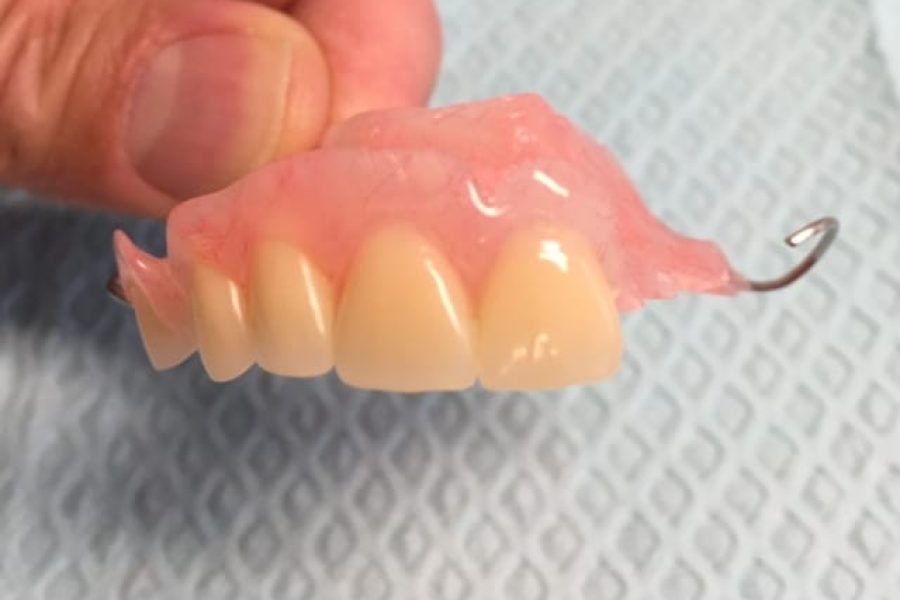
Losing one or more upper teeth can affect chewing, speech, and the appearance of your smile, especially when the missing teeth are near the front of the mouth. Flexible partial dentures for upper teeth are one removable option that uses a thermoplastic material instead of a conventional rigid acrylic or visible metal framework.
In this guide, we’ll explain how flexible partial dentures work, their main benefits and limitations, how they compare with metal and acrylic partial dentures, and what factors a dentist considers when deciding if they are suitable.

What Are Flexible Partial Dentures for Upper Teeth?
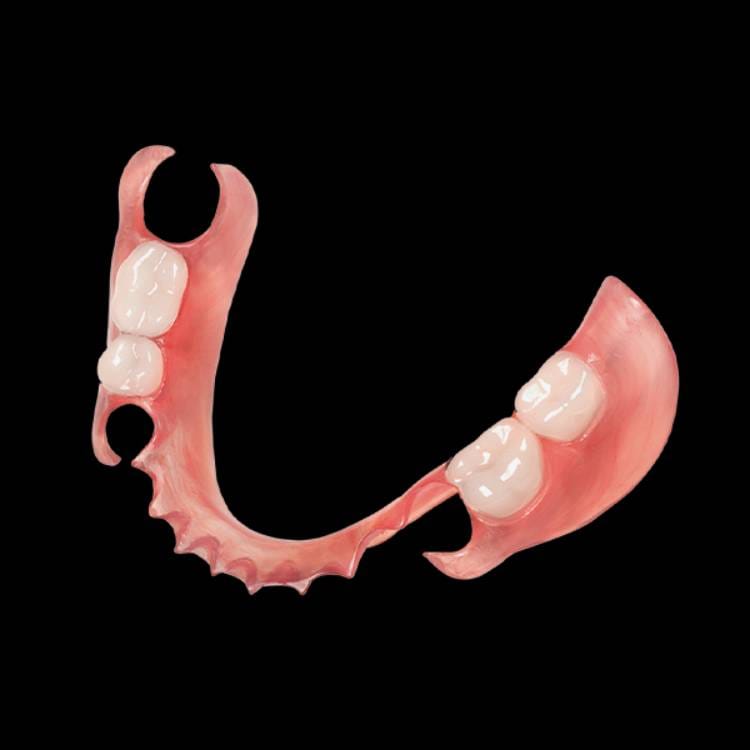
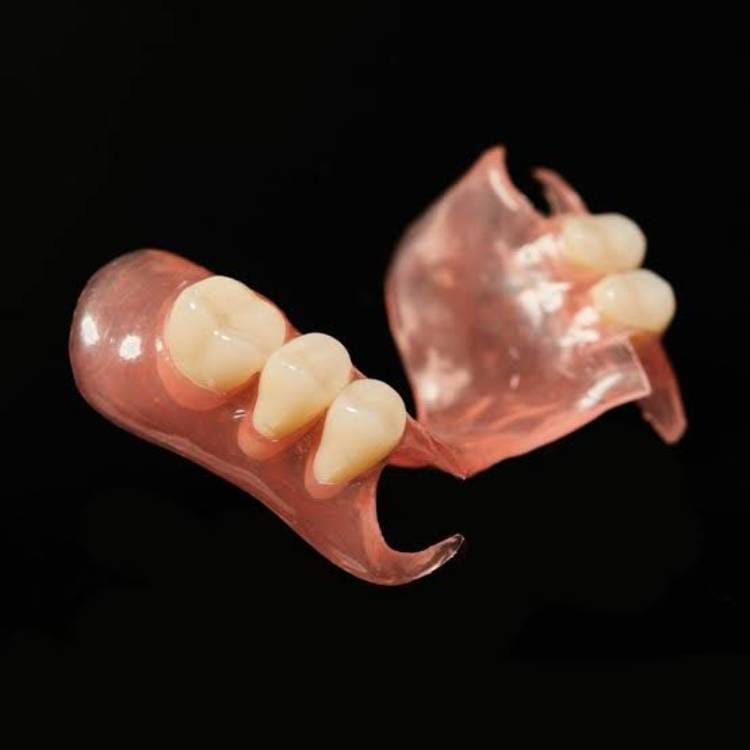
A flexible partial denture is a removable dental prosthesis that replaces one or more missing teeth and uses a flexible thermoplastic base. Materials can include nylon-based resins and other thermoplastic polymers. Some products, such as Valplast and DuraFlex, are examples of flexible denture materials used in dentistry.
Unlike a cast-metal partial, the flexible material can extend around selected remaining teeth and may use tooth-coloured or gum-coloured clasp areas for retention. The base can also blend more closely with the surrounding gum tissue, which is useful when replacing visible upper front teeth.
The important point is that flexibility does not automatically make a partial denture suitable for every case. We consider the number and position of missing teeth, the remaining teeth, gum condition, bite, available support, and chewing force before recommending a material.
Why Choose Flexible Partial Dentures for Upper Teeth?
The main reason patients consider flexible partial dentures is usually their appearance, but the material offers several other characteristics that may make it useful in selected cases.
A more discreet appearance
Upper front teeth are highly visible when you speak or smile. A flexible partial can use gum-coloured extensions instead of the metal clasps commonly seen on some traditional partial dentures. The thermoplastic base may also have a translucent quality that allows some of the underlying gum color to show through.
A lighter, less rigid design
Flexible materials bend slightly during insertion and removal rather than behaving like a rigid acrylic or cobalt-chromium framework. Some patients find this less bulky inside the mouth. That does not mean a flexible partial will feel completely unnoticeable. A new prosthesis may still require an adjustment period, and a poorly fitted appliance can cause pressure or soreness regardless of the material.
Less visible retention
A flexible partial can use extensions around supporting teeth rather than conventional metal clasps. This can improve the appearance of a replacement for an upper front tooth. The remaining natural teeth still matter. They provide important support and retention, so their position, strength, and periodontal condition need to be assessed before treatment.
Read more: “Pictures of Denture Sores and How to Treat Them”
It can be an alternative to more invasive replacement
A removable partial does not require placement of an implant into the jawbone. Dental implants are a different treatment that involves surgical placement of an artificial tooth root, followed by restoration with a crown or other prosthesis.
For someone considering a replacement without implant surgery, a removable partial may be worth discussing. The right choice depends on the clinical situation, not simply on whether one option costs less or involves fewer procedures.
Flexible vs. Metal vs. Acrylic Partial Dentures
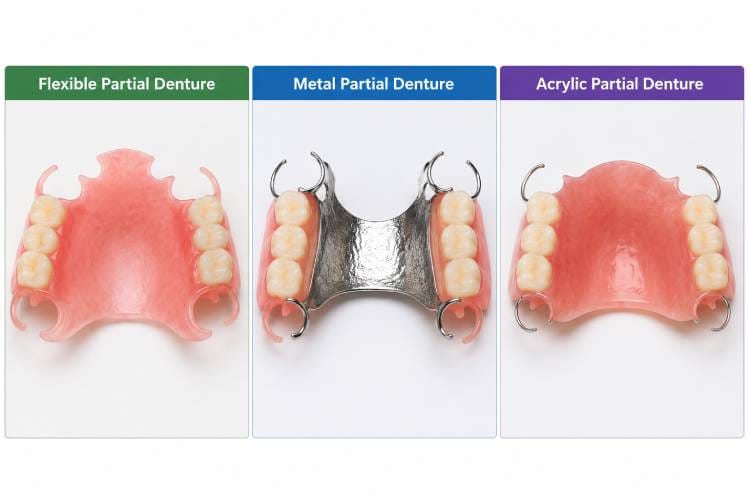
The material changes how a partial denture behaves in the mouth. Here is the practical difference between the three common options.
| Feature | Flexible partial | Cast-metal partial | Acrylic partial |
| Appearance | Usually very discreet | Metal may be visible | Generally more visible/bulkier |
| Flexibility | High | Low | Low to moderate |
| Rigidity and force control | Lower | High | Moderate |
| Adjustability | Limited | High | Moderate |
| Typical durability | Moderate | High | Lower than metal in many applications |
| Main advantage | Appearance and flexibility | Stability and strength | Simpler, often lower-cost option |
Cast-metal partial dentures commonly use cobalt-chromium or similar alloys. Their rigid framework can provide strong support and better control of chewing forces, which is particularly important in cases with higher functional demands.
Flexible partials have an aesthetic advantage in many anterior cases, but their flexibility is also a limitation. They cannot control movement and distribute forces in exactly the same way as a rigid metal framework. Acrylic partials remain another option. They can be useful in certain situations, but their bulk and mechanical properties differ from those of both flexible and cast-metal designs.
Considering a Flexible Partial Denture?
If you have missing upper teeth and are considering a flexible partial denture, a dental assessment can help determine whether this option suits your teeth, gums, and bite. Our team at Walk-In Dental Clinic can assess and discuss whether a flexible partial denture is suitable for you. Contact us to book an appointment and explore the available options for replacing your missing teeth.
Are Flexible Partial Dentures Suitable for Everyone?
Flexible partial dentures can work well when the missing teeth, remaining teeth, bite, and supporting tissues provide suitable conditions. They may be particularly attractive when appearance is a major concern, and the patient wants a removable replacement without obvious metal.
We would be more cautious about using a flexible material when the case requires substantial rigidity or precise control of chewing forces. Laboratory guidance notes that cast-metal frameworks are generally better suited to situations with higher functional demands, long edentulous spans, or a need for stronger force control.
An examination should also check the gums and remaining teeth. If tooth decay, periodontal disease, or another problem is present, the issue may need treatment before a partial denture can be made. Depending on the findings, alternatives such as a bridge or dental implants may also be discussed.
Read more: “CDCP Coverage for Crowns, Root Canals & Dentures”
What Are the Disadvantages of Flexible Partial Dentures?
Flexible material offers some useful benefits, but there are also trade-offs to consider. One important limitation is adjustability. According to research published in PubMed Central, flexible thermoplastic removable partial dentures have specific differences in fit, retention, and clinical performance that should be considered when selecting this type of prosthesis.
Unlike some rigid partial dentures, flexible materials can be more difficult to modify if the fit changes over time, and significant changes may require the denture to be remade. They may also be less suitable when a case requires greater rigidity and mechanical support, particularly for patients who place heavier chewing forces on their remaining teeth.
Another consideration is hygiene. Like other removable dentures, flexible partial dentures can accumulate plaque and other deposits when not cleaned regularly.
How Should You Care for a Flexible Partial Denture?
Daily care protects both the prosthesis and the natural teeth that support it.
- Remove the partial as directed by your dentist and clean it daily.
- Use a soft-bristled brush and a denture cleanser recommended for the material.
- Avoid abrasive products that can scratch the surface.
- Do not use very hot or boiling water, as heat can distort certain thermoplastic materials.
- Rinse the appliance after meals when possible.
- Clean your remaining teeth and gums carefully.
- Follow the manufacturer’s instructions for soaking or storage.
- Have the fit checked if the appliance becomes loose, causes persistent soreness, or interferes with chewing or speaking.
Your natural teeth still need regular preventive care. Teeth whitening may improve the color of natural teeth, but it will not change the color of an existing denture tooth or thermoplastic base, so this should be discussed before cosmetic treatment.
Read more: “How to Clean Dentures at Home”
How Much Do Flexible Partial Dentures Cost?
There is no single reliable price for a flexible partial because the fee varies with the number of teeth being replaced, the material, laboratory work, complexity, and the dental office providing treatment.
One competitor gives a broad U.S. estimate of approximately $400 to $3,000+, while another reports flexible partials lasting around 5–8 years. These figures should not be treated as universal prices or guarantees, as fees and service life vary considerably across cases and locations.
Conclusion
Flexible partial dentures for upper teeth can be a useful removable option when appearance, flexibility, and the absence of visible metal are important. They can work particularly well for selected cases involving missing upper front teeth, but their lower rigidity and limited adjustability make them unsuitable for some patients.
We recommend assessing the remaining teeth, gums, bite, and number of missing teeth before choosing between a flexible partial, acrylic partial, cast-metal partial, bridge, or implant-supported replacement. If you are also considering dental veneers or bonding for nearby natural teeth, discuss the options together so the final result forms a single treatment plan.
FAQ
1. Are flexible partial dentures good for upper teeth?
They can be a good option for selected patients, particularly when aesthetics are important. Their suitability depends on the location of the missing teeth, the remaining teeth, the bite, gum health, and the required stability.
2. How long do flexible partial dentures last?
There is no fixed lifespan. One published dental guide reports approximately 5–8 years, while another gives 5–7 years. Actual service life depends on material, wear, oral hygiene, fit, bite forces, and changes in the mouth.
3. Are flexible partial dentures better than metal partial dentures?
Neither is universally better. Flexible partials generally have an aesthetic advantage, while cast-metal partials provide greater rigidity, stability, and force control. The choice should reflect the clinical requirements of the case.
Have you ever used a flexible partial denture? Share your experience in the comments: what did you like about it, and what would you tell someone considering one?