

Have you ever noticed a small piece of gum tissue that seems to “peel” away from your tooth, or perhaps your teeth suddenly look longer than they used to? That sensation of a loose gum flap is more than just a minor annoyance; it is a clinical sign of gum recession or advanced periodontal disease.
When gums pull away from the tooth, they create “pockets” where bacteria hide, leading to infection, sensitivity, and, if left untreated, tooth loss. The good news? Modern dentistry offers several gum disease treatments for fixing a loose gum flap and restoring your gum line. Let’s discover what a loose gum flap is, common causes, and the best treatment options!
Quick Guide: Fixing a Loose Gum Flap
| Treatment Option | Best For… | Procedure Type | Recovery Time |
| Scaling & Root Planing | Early-stage recession or infection | Deep Cleaning (Non-surgical) | 1–2 days |
| Flap Surgery | Deep pockets (>5mm) | Surgical Reattachment | 1–2 weeks |
| Gum Grafting | Severe recession/exposed roots | Tissue Replacement | 2–3 weeks |
| Pinhole Technique | Mild to moderate recession | Minimally Invasive | 24–48 hours |
| Bonding/Veneers | Cosmetic appearance | Restorative | Immediate |

What Exactly is a “Loose Gum Flap”?
In a healthy mouth, gum tissue fits snugly around each tooth like a turtleneck sweater. A “loose gum flap” occurs when the gingival fibers that attach the gum to the tooth root are destroyed. This creates a gap or “periodontal pocket.”
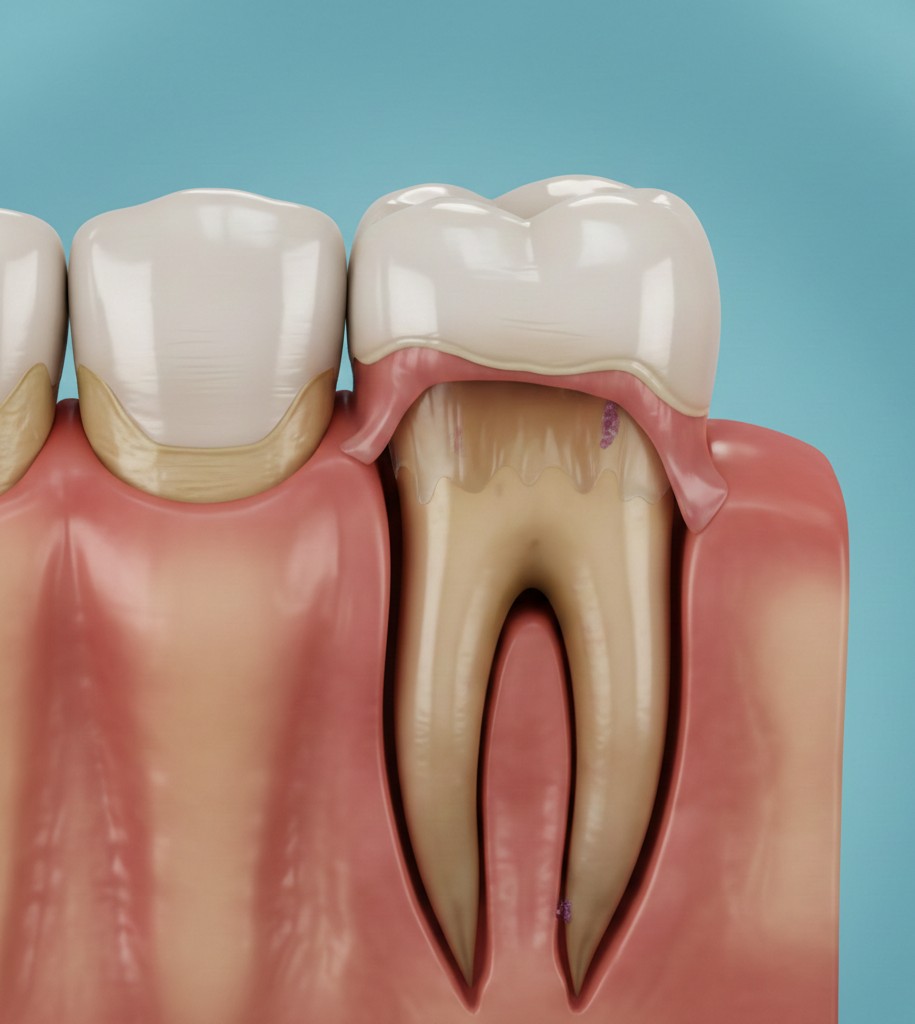
Because the tooth root is covered in cementum (which is much softer and more sensitive than enamel), an exposed or loose flap often leads to sharp pain when eating hot or cold foods. If you feel a flap of skin near your back molars (especially wisdom teeth), this might be an operculum, which is prone to infection (pericoronitis).
Common Causes of Gum Recession and Loose Flaps
Understanding why your gums are receding is the first step toward fixing a loose gum flap.
- Periodontal Disease: The #1 cause. Bacterial plaque destroys the attachment fibers. According to Healthline, periodontal disease is an advanced form of gingivitis that begins with a buildup of bacteria and plaque within the gums and teeth.
- Aggressive Brushing: Using a hard-bristled brush or “scrubbing” too hard can literally wear away the delicate gum tissue.
- Tobacco Use: Smoking restricts blood flow to the gums, making it harder for tissue to stay attached or heal.
- Bruxism (Teeth Grinding): The constant pressure of grinding can cause gums to recede and teeth to loosen.
- Genetics: Some people are naturally predisposed to thin gum tissue that recedes more easily over time.
Read More: What Services Emergency Dental Clinics Provide
Professional Treatments: How to Fix a Loose Gum Flap
Fixing a loose gum flap should be tailored to the depth of the periodontal pockets. Let’s explore some of the common treatment options:
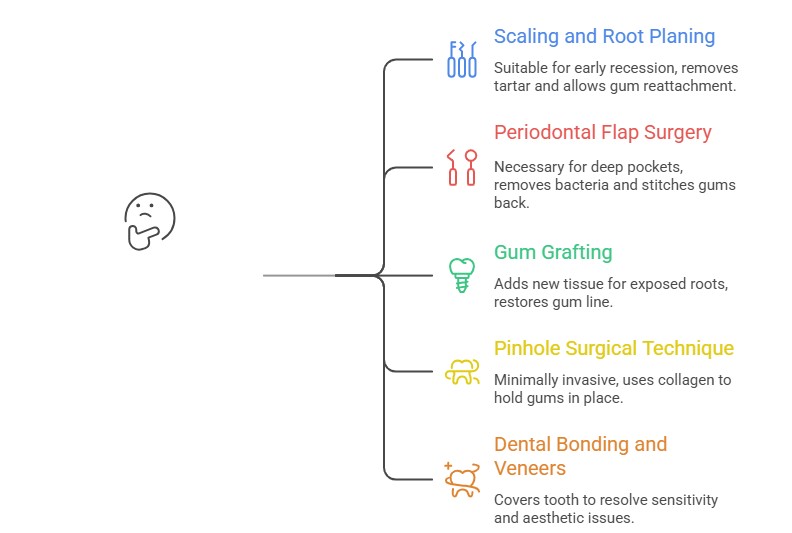
1. Scaling and Root Planing (Deep Cleaning)
If the recession is early, a deep cleaning is often enough to fix a loose gum flap. We remove the tartar (calculus) from beneath the loose flap and smooth the tooth root. This allows the gum tissue to shrink and reattach itself to a clean surface.
Read More: Regular Dental Cleanings Prevent Emergencies
2. Periodontal Flap Surgery (Pocket Reduction)
If pockets are too deep to clean with standard tools, flap surgery is necessary. We gently lift the loose gum flap to remove deep-seated bacteria, then stitch the tissue back into a snug, healthy position. This effectively “closes the gap” where bacteria once thrived, preventing tooth abscess.
3. Gum Grafting
When the gum has receded so far that the root is fully exposed, we may need to “add” new tissue. By taking a small amount of tissue from the roof of your mouth or using donor tissue, we can rebuild the gum line. This protects the tooth and restores a natural, aesthetic smile.
Even though the procedure involves incisions and sutures, the dental numbing duration lasts only a short time, and recovery is expected within 2-3 weeks.
4. The Pinhole Surgical Technique (PST)
The Pinhole Surgical Technique is when the dentist makes a tiny “pinhole” in the existing gum tissue above the recession. Using specialized instruments, they gently loosen the tissue and slide it down to cover the exposed root.
Then, they insert tiny collagen strips through the pinhole, which act as a scaffold, holding the gums in their new position while your body naturally generates its own new collagen to secure the bond.
5. Dental Bonding and Veneers (Cosmetic & Protective)
Bonding and veneers focus on covering the tooth to resolve sensitivity and aesthetic issues, rather than fixing a loose gum flap.
Dental bonding involves applying a tooth-colored composite resin directly to the exposed root, which acts as an artificial “shield” that blocks external stimuli (such as cold air or hot coffee) from reaching the sensitive nerves. It is a quick, non-surgical fix that can be completed in one visit without anesthesia.
In cases of significant recession, we can use “pink porcelain” or custom-shaded dental veneers to mimic the look of natural gum tissue, effectively “masking” the recession and restoring a gum line.
Contact Us for Help!
Wondering if you might have a loose gum flap?
Contact us for immediate care and the best available treatment!
Can You Fix a Loose Gum Flap at Home?
It is a common myth that gums can “grow back” with special toothpastes or oils. Once gum tissue is lost, it does not regenerate naturally. However, you can manage the symptoms at home while waiting for your appointment:

- Saltwater Rinses: Helps reduce inflammation and kill surface bacteria.
- Switch to Soft Bristles: Stop further damage immediately by using an extra-soft toothbrush.
- Antibacterial Mouthwash: Look for alcohol-free versions containing chlorhexidine if prescribed by your dentist.
Why You Shouldn’t Wait: The Risks of Neglect
A loose gum flap is an open door for bacteria. If left untreated, the infection can spread to the jawbone, leading to bone loss and eventually causing the tooth to fall out. Furthermore, chronic gum inflammation is linked to systemic health issues like heart disease and diabetes.
Protect Your Smile: The Importance of Timely Gum Care
A loose gum flap is your body’s way of signaling that your oral “foundation” is under attack. Whether it’s caused by aggressive brushing or a developing infection, early intervention is the key to avoiding invasive surgery.
If you’ve noticed your gums pulling away, book a periodontal evaluation today with the best dentists in Toronto to secure your smile.
FAQ
-
Does fixing a loose gum flap hurt?
Most treatments, including flap surgery, are performed under local anesthesia so that you won’t feel pain during the procedure. Post-surgical discomfort is typically managed with over-the-counter pain relievers.
-
Can I “glue” a loose gum flap back at home?
No. Never attempt to use over-the-counter adhesives or home remedies to reattach gum tissue. This can cause severe infection and tissue death.
-
How much does gum flap surgery cost?
Costs vary based on the extent of the recession and the number of teeth involved. Periodontal diseases are commonly under insurance and CDCP coverage.
-
Will my gums grow back on their own?
Unfortunately, no. Gums do not have regenerative properties like skin. They require professional dental intervention to be repositioned or grafted.
-
How long is the recovery after gum surgery?
For deep cleanings, recovery is immediate. For flap surgery or grafting, most patients return to work in 1–2 days, with full tissue healing taking 2–3 weeks.
-
What is the “flap” over my wisdom tooth?
This is called an operculum. It is common with partially erupted wisdom teeth and often requires a minor procedure called an operculectomy to remove the flap and prevent infection.
-
Can salt water fix a loose gum?
Salt water can reduce swelling and bacteria, making the flap feel less “loose” temporarily, but it cannot reattach the tissue to the tooth.
-
Is a loose gum flap a dental emergency?
If it is accompanied by throbbing pain, pus, or fever, it is an emergency (pericoronitis or an abscess). Otherwise, it should be treated promptly, but it is not always an “immediate” emergency.
-
Can vaping or smoking cause gum flaps to loosen?
Yes. Nicotine constricts blood vessels, preventing the gums from getting the nutrients they need to stay firmly attached to the bone and teeth.
-
What happens if I ignore a loose gum flap?
The pocket will deepen, bacteria will destroy the underlying bone, and the tooth will eventually become mobile and fall out.
Have you ever had a loose gum flap? What type of procedure did your dentist choose to fix it? Share your thoughts in the comments and join the conversation.
