
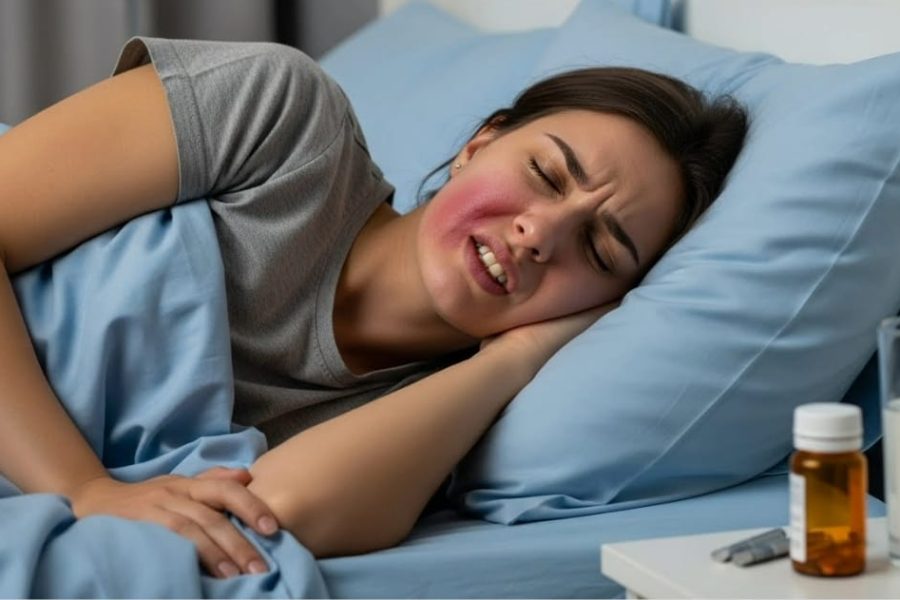
There is nothing quite like a midnight toothache to remind you how much you value a good night’s sleep. When the world goes quiet, and you lie down to rest, a dull ache can suddenly transform into a sharp, throbbing sensation that makes sleep feel impossible. Two common questions are: Which side should you sleep on with a toothache, and when should you contact an emergency dentist?
We understand that dental emergencies don’t stick to a 9-to-5 schedule. While you wait for your booked appointment, your sleeping position can play a massive role in how much pain you experience overnight. In this guide, we’ll explain exactly how to position yourself for maximum relief, and why your tooth seems to “wake up” the moment your head hits the pillow.
Quick Guide: Which Side Should You Sleep on With a Toothache?
| Feature | Best Practice |
| Best Side to Sleep On | The side opposite to the aching tooth. |
| Head Elevation | Use 2–3 pillows to keep your head above your heart. |
| Ideal Posture | Elevated on your back or the non-painful side. |
| Immediate Relief | Cold compress (15 mins on/off) and saltwater rinse. |
| Avoid This | Lying completely flat or sleeping on the side of the pain. |

Why Does My Toothache Hurt More at Night?
Many patients wonder why a dull ache during the day becomes an unbearable throb at night. The answer lies in gravity and blood flow. When you lie down flat, blood rushes to your head. This increased pressure puts more stress on the sensitive nerves and inflamed tissues inside your tooth, intensifying the “pounding” sensation.
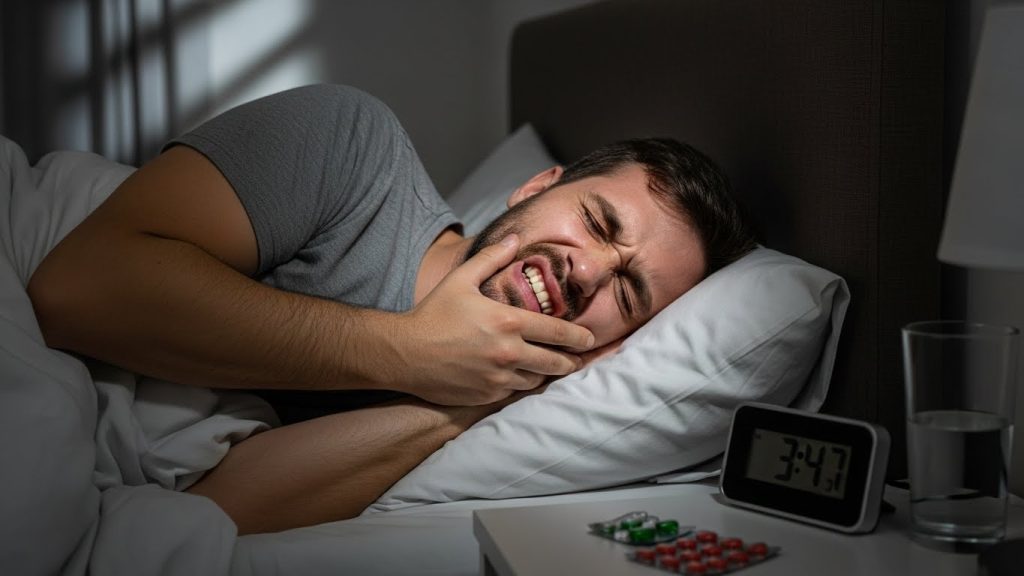
Additionally, during the day, you are distracted by work, conversations, and activities. This is also a reason for nighttime toothaches; the lack of distractions makes you hyper-aware of every pulse of pain.
Which Side Should You Sleep On With a Toothache?
The general, golden rule is simple: Sleep on the side opposite your toothache. If your pain is on the right side of your mouth, try to sleep on your left side. By doing this, you avoid putting direct pressure on the affected area. Even the weight of your cheek against a soft pillow can compress the inflamed gums or nerves, triggering sharp jolts of pain.
What if Both Sides Hurt?
But which side should you sleep on with a toothache if you are experiencing generalized pain or pain on both sides? The best position is sleeping on your back. This allows for the most neutral distribution of pressure and makes it easier to keep your head in an elevated position.
The Power of Elevation
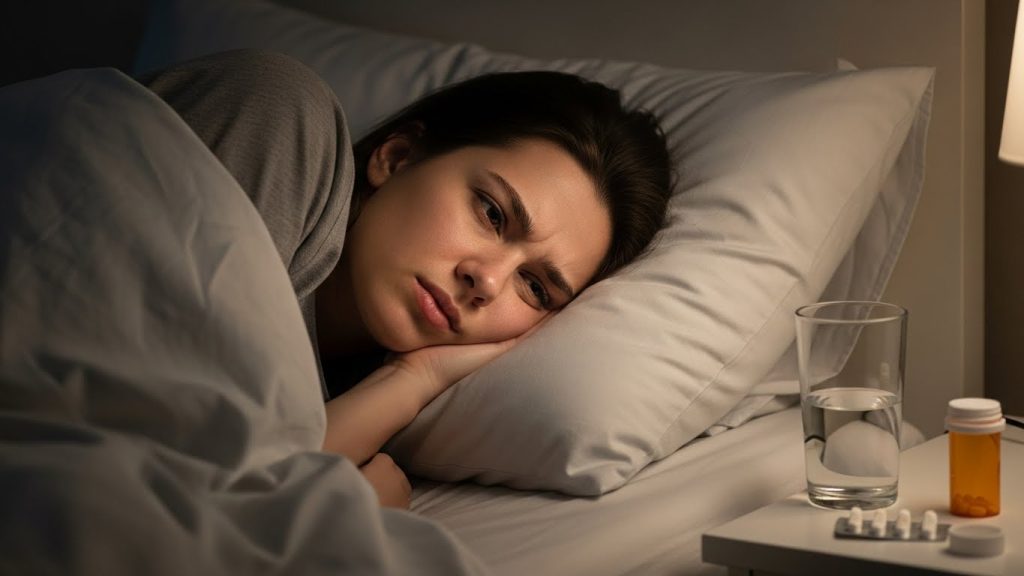
Regardless of which side you choose, the most critical factor is elevation. Instead of using a single thin pillow, prop yourself up with two or three pillows so your head is significantly higher than your heart. This use of gravity helps “drain” blood away from the head and face, reducing the internal pressure and swelling that cause throbbing. Some patients even find relief by sleeping in a recliner chair for the night.
Common Causes of Your Dental Discomfort
Aside from the question, “Which side should you sleep on with a toothache?”, understanding why your tooth hurts can help you manage it better until you reach dental care. While a cavity is the most common culprit, other issues like infections or structural damage often present with similar symptoms, especially when lying down. However, in some cases, you might gain more of the benefits of emergency dental services if you visit earlier.
| Possible Cause | Key Symptom | Urgency Level |
| Cavity or Tooth Decay | Sensitivity to sweets or temperature. | Moderate |
| Dental Abscess | Constant throbbing, fever, or swelling. | High (Emergency) |
| Cracked Tooth | Sharp pain when biting down. | High |
| Gum Disease | Bleeding, sore, or receding gums. | Moderate |
| Wisdom Teeth | Pressure at the back of the jaw. | Moderate to High |
Contact Us for Help!
Are you experiencing a dental emergency?
Contact us for immediate care, same-day appointment, and the best available treatment!
Remedies to Help You Drift Off!
While knowing which side should you sleep on with a toothache and changing your sleeping position helps, combining it with these remedies can maximize your comfort:
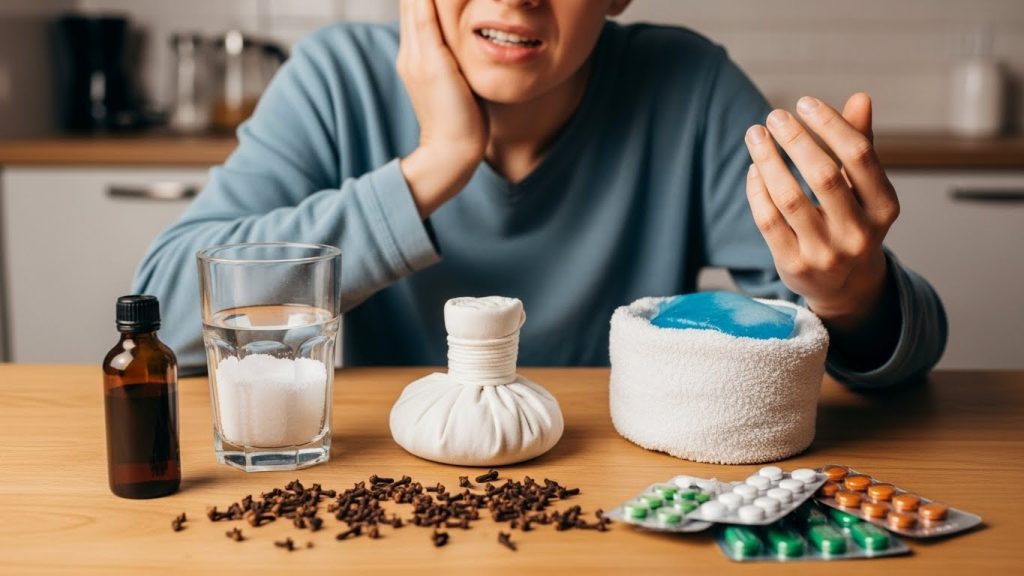
Liquid Relief: Therapeutic Rinses and Cold Therapy
Before you try to sleep, using specific rinses can help clean the area and reduce the bacterial load causing inflammation. Saltwater and hydrogen peroxide are the two most effective “first-line” defenses you have in your kitchen or medicine cabinet. Combined with external cooling, these can significantly dull the pain signals sent to your brain.
| Method | Application | Benefit |
| Saltwater Rinse | 1/2 tsp salt in 8oz warm water; swish and spit. | Natural disinfectant; reduces gum swelling. |
| Hydrogen Peroxide | Mix 3% peroxide with equal parts water; spit. | Kills bacteria and relieves inflammation. |
| Cold Compress | Ice pack wrapped in a towel; 15 mins on/off. | According to Healthline, especially effective if trauma has caused your toothache. Constricts blood vessels to reduce throbbing. |
Kitchen Remedies: Peppermint, Garlic, and Extracts
Your pantry often contains powerful natural anesthetics and antimicrobials. Peppermint provides a cooling sensation that can soothe sensitive nerves, while garlic releases allicin, a natural antibiotic. Vanilla extract, interestingly, contains a small amount of alcohol and antioxidants that can provide a mild numbing effect when applied directly to the painful spot.
| Remedy | Preparation | Benefit |
| Peppermint Tea Bags | Use a slightly warm or chilled tea bag on the tooth. | Menthol provides a mild numbing effect. |
| Garlic | Crush a clove into a paste and apply. | Allicin fights bacteria and relieves pain. |
| Vanilla Extract | Apply a small amount to a cotton ball and dab. | Alcohol content numbs; antioxidants heal. |
Plant-Based Power: Clove and Herbal Solutions
For centuries, specific plants have been used to treat dental pain:
| Botanical | Method of Use | Key Benefit |
| Clove | Dab clove oil or a whole clove on the area. | Strongest natural numbing agent (Eugenol). |
| Guava Leaves | Chew fresh leaves or use as a tea rinse. | Anti-inflammatory and antimicrobial properties. |
| Wheatgrass | Use as a mouthwash or chew the grass. | High chlorophyll content fights infection. |
| Thyme | Apply essential oil to a cotton ball or rinse. | Powerful antioxidant and antibacterial. |
| Toothache Plant | Chew the leaves (Acmella oleracea). | Creates a “tingling” numbing sensation. |
Medical Support: OTC Products and Medications
When natural remedies aren’t enough, Over-the-Counter (OTC) products can bridge the gap and are usually available in every emergency dental kit and at pharmacies.
| Product Type | Common Examples | Usage Tip |
| NSAIDs | Ibuprofen (Advil/Motrin). | Best for reducing “pulsing” or “throbbing.” |
| Analgesics | Acetaminophen (Tylenol). | Good for general pain; can be paired with NSAIDs. |
| Topical Gels | Benzocaine (Orajel). | Apply directly to the gum for instant numbing. |
When to Seek Urgent Dental Care
Now that we covered the answer to “which side should you sleep on with a toothache,” understand that these tips can help you survive the night. A toothache is usually a signal of an underlying issue, such as a cavity, gum infection, or a cracked tooth. You should contact your dentist immediately if you experience:
- Persistent fever or chills.
- Visible swelling in the gums or face.
- A foul taste or pus in the mouth.
- Severe toothache that makes it impossible to eat or speak.
Read More: What to Do If You Still Feel Pain Even After a Root Canal Therapy?
Getting Through the Night and Finding a Cure
While finding which side should you sleep on with a toothache and propping up your pillows can help you survive a rough night, remember that these are only temporary fixes. A toothache is your body’s way of signaling that something needs professional attention, whether it’s a deep cavity, a hidden infection, or a damaged filling.
Ignoring the pain or relying solely on home remedies can lead to more severe complications, such as an abscess or tooth loss. You can book the best dentists in Toronto after hours who specialize in providing immediate, compassionate relief for dental emergencies.
FAQ
-
Is it better to sleep on my back or my side?
Sleeping on your back is generally best, as it prevents pressure on your jaw and keeps your head elevated more easily.
-
Can I use a heating pad for a toothache?
Avoid heat. Heat can increase blood flow and inflammation, potentially worsening the pain. Use a cold compress instead.
-
Why does my tooth throb when I lie down?
Increased blood pressure in the head when lying flat increases pressure on the nerves inside the tooth.
-
Does clove oil really work for nighttime pain?
Yes, clove oil contains eugenol, a natural anesthetic. A small amount on a cotton ball can provide temporary numbing.
-
How many pillows should I use?
Use 2 or 3 pillows. The goal is to keep your head significantly higher than your heart.
-
Can I take ibuprofen and acetaminophen together?
Often, yes, but you must consult your pharmacist or doctor first to ensure it is safe for your specific health profile.
-
Should I brush my teeth if it hurts?
Yes, but be very gentle. Removing food debris and bacteria is essential to prevent further irritation.
-
What does it mean if my gums are also swollen?
Swelling often indicates an infection or tooth abscess. This is a dental emergency and should be treated immediately by a dentist.
-
Can I wait until the morning to see a dentist?
If the pain is manageable and there is no fever or major swelling, you can wait, but see a dentist as soon as they open.
-
Why is the pain worse after a hot shower?
Hot water increases overall blood circulation, which can lead to increased pressure and throbbing in the inflamed tooth.
Have you ever experienced a sharp, throbbing toothache at night? What kind of relieving method did you use? Share your thoughts in the comments and join the conversation.
