
Have you ever heard your dentist mention numbers like “tooth 14” or “FDI 26” and wondered what they mean? Dentists use specific numbering and naming systems to identify each tooth accurately. These systems help dental professionals all over the world communicate clearly about your oral health. In this guide, we’ll explain how teeth are numbered and named, what systems dentists use, and how understanding them can help you follow your dental treatments more easily.
What Is a Tooth Numbering (Notation) System?
Before diving into the details, let’s start with the basics. A tooth numbering system, also known as dental notation, is a standardized way for dentists to identify and refer to each tooth. It prevents confusion, ensures clear communication, and helps organize dental charts, records, and treatment plans.
Why Dentists Use Numbering and Naming
Each person has many teeth, and every one of them plays a different role in eating and speaking. To avoid confusion, dentists use standardized numbering and naming systems to identify each tooth. This makes communication about dental records, X-rays, and treatments fast and accurate.
Key Terms: Quadrant, Midline, Permanent vs. Primary Teeth
Dentists divide your mouth into four quadrants:
- Upper right
- Upper left
- Lower left
- Lower right
The midline is the imaginary line that splits your face and mouth into left and right halves. Adults have 32 permanent teeth, while children have 20 primary (baby) teeth that later fall out and are replaced by adult ones.

Major Tooth Numbering Systems (and Where They’re Used)
There isn’t just one way to number teeth; different countries and dental schools may use slightly different methods. However, three main systems are used worldwide: the Universal (ADA) system, the FDI (ISO) system, and the Palmer notation. Let’s take a closer look at how each works and where they’re commonly used.
Suggested article: Topics That a General Dentist Can Help
Universal (ADA) Numbering System: Common in the U.S. and Canada
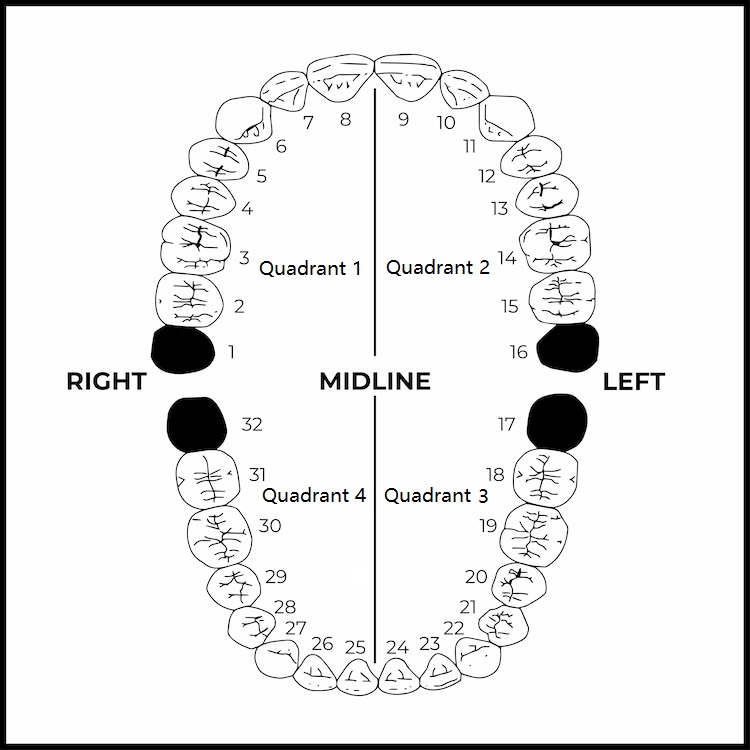
The Universal Numbering System, also known as the American Dental Association (ADA) system, numbers adult teeth from 1 to 32, starting from the upper right wisdom tooth and ending with the lower right wisdom tooth.
- Upper right to upper left: Teeth 1–16
- Lower left to lower right: Teeth 17–32
For children, letters A to T are used instead of numbers. This system is widely used in North America.
FDI / ISO 3950 Two-Digit Notation: Global Standard
The FDI World Dental Federation (Fédération Dentaire Internationale) or ISO 3950 system uses two digits for each tooth:
- The first digit (1–4) represents the quadrant.
- The second digit (1–8) represents the tooth position from the midline.
For example:
- Tooth 11 = upper right central incisor
- Tooth 26 = upper left first molar
This system is used internationally and recognized by the World Dental Federation.
Palmer Notation (UK and Older System)
In the Palmer notation, each quadrant has its own symbol (┘└┐┌), and teeth are numbered 1–8 starting from the midline.
Example:
- Upper right central incisor = ⌜1
- Lower left first molar = ⌞6
This system is still used by some dentists in the UK and orthodontists.
Other / Less Common Systems
Some countries or dental institutions may use modified numbering formats, but the Universal and FDI systems are now the most widely accepted worldwide.
Contact Us for Top-Quality Dental Services!
Understanding your teeth is a great first step toward a healthier smile, but nothing beats a professional check-up! If you’re experiencing dental issues or simply want a routine exam, our team at Walk In Dental Clinic is here to help.
Contact us today to schedule your appointment.
Worth reading: How Regular Dental Cleanings Prevent Emergencies
Tooth Names and Types: Names by Position
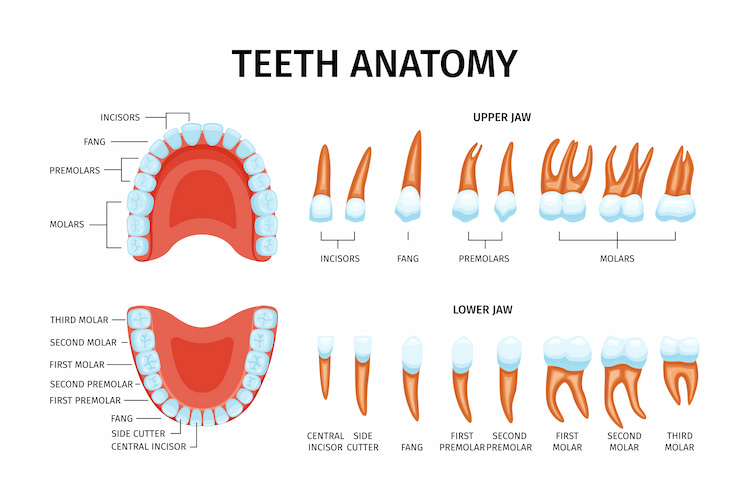
Every tooth has a specific name and function based on its position in your mouth. Knowing the names of your teeth helps you understand what your dentist refers to during checkups or treatment plans. Let’s explore each tooth type and what it does.
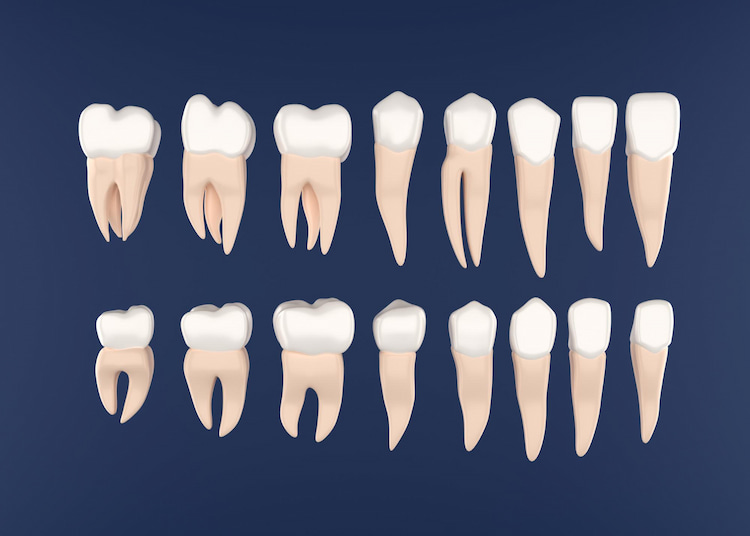
- Incisors (Central and Lateral)
The incisors are the front teeth used for cutting food. Each jaw has two central and two lateral incisors.
- Canines (Cuspids)
The canines, or cuspids, are sharp, pointed teeth next to the lateral incisors. They help tear food and play a role in shaping your smile.
- Premolars (Bicuspids)
The premolars, or bicuspids, are behind the canines. They have flat surfaces for crushing and grinding food. Adults have eight premolars in total.
- Molars (Including Wisdom Teeth)
The molars are the large, strong teeth at the back used for grinding. The last molars in each corner are called third molars or wisdom teeth.
Mapping Tooth Names and Numbers Across Systems
Because different numbering systems exist, the same tooth might have a different code depending on where you are. This section will help you understand how each system matches up and how baby teeth fit into the picture, too. The table below shows an example of a conversation (Universal ↔ FDI ↔ Palmer).
| Tooth Name | Universal | FDI | Palmer |
| Upper Right Central Incisor | 8 | 11 | ⌜1 |
| Upper Left Central Incisor | 9 | 21 | ⌝1 |
| Lower Left First Molar | 19 | 36 | ⌞6 |
| Lower Right Wisdom Tooth | 32 | 48 | ⌟8 |
Primary or baby teeth follow similar patterns but are fewer in number (20 total). In the Universal system, they’re labeled A-T, while in the FDI system, quadrants are numbered 5-8 instead of 1-4. For missing teeth, dentists still refer to their original number to keep records consistent; the numbering sequence doesn’t change.
Why It Matters and How Patients Benefit
Understanding how teeth are numbered and named isn’t just for dentists; it can help you, too. Knowing what your dentist means when they mention specific tooth numbers can make your appointments more informative and less confusing.
For example, knowing what your dentist means by “tooth 13” or “FDI 23” helps you follow your dental procedures and reports with confidence. Therefore, it’s easier to discuss X-rays, fillings, and other treatments with your dentist.
These systems make it possible for dentists around the world to understand each other’s notes and ensure accurate, lifelong dental records.
Conclusion
Tooth numbering and naming systems might seem complicated at first, but they play a big role in keeping dental communication clear and consistent. Whether your dentist uses the Universal or FDI system, understanding the basics helps you stay informed and confident during dental visits.
At Walk In Dental Clinic, we take time to explain every step of your treatment, from the tooth number to the care it needs, so you always know what’s happening with your smile. We offer various dental services, from general dentistry to cosmetic dental treatments in North York.
Please contact us, and our team will restore your dental health or improve your smile aesthetics with a patient-centred approach and expert care.
FAQ
What numbering system is used in Canada and the U.S.?
Dentists in North America mostly use the Universal Numbering System (ADA). It’s a simple, sequential method that helps dentists quickly record and identify teeth across charts and X-rays.
What does FDI 11 mean?
It refers to the upper right central incisor in the FDI two-digit system. This global format helps ensure consistency across different countries and dental schools.
How many teeth are in adults and children?
Adults have 32 permanent teeth, while children have 20 primary teeth. Each set plays an important role in chewing, speaking, and shaping facial structure.
Is tooth numbering the same worldwide?
No, the Universal system is common in North America, but the FDI system is used globally. However, all systems serve the same purpose: to clearly identify and label each tooth.
What if a tooth is missing?
Dentists still use the same number for record-keeping even if that tooth has been removed. This ensures your dental history remains consistent for future treatments or replacements.
Did this guide help you understand how teeth are numbered and named? Share your thoughts, questions, or experiences in the comments below; our team at Walk In Dental Clinic is happy to answer and guide you toward better dental health.

